Honey Comb Dripping Borders: A Designer's Practical Review
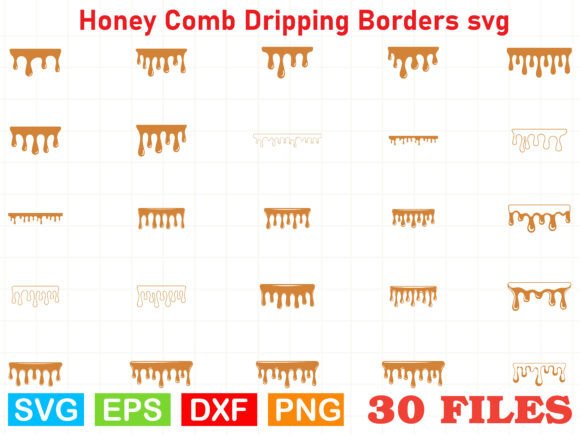
When you're scrolling through embroidery files for a client project or a new shop item, you’re not just looking for a pretty shape. You’re evaluating a tool—how will this design translate into stitches, fabric, and a finished product someone will actually love or buy? That’s the lens I’m using to look at the Honey Comb Dripping Borders Svg Bundle.
The First Impression: Sweet Geometry with a Modern Edge
This design immediately strikes a balance between organic and structured. The honeycomb pattern brings a sense of natural order, while those dripping borders introduce a playful, almost liquid movement. It doesn’t feel overly rustic or purely scientific; it lands in a sweet spot of modern craft. The mood is fresh, a bit whimsical, but grounded. For an embroidery designer, this visual personality suggests it belongs on projects that are meant to feel special, thoughtful, and a little unique—not mass-produced generic.
I picture it naturally on items that celebrate handmade care: a custom baby blanket border, the accent on a linen pillow cover for a boutique, or the defining graphic on a canvas tote bag for a small shop. The theme isn’t tied to one season or event, which is a strength. It could work for a kitchen towel as a gift, or as a subtle branding element on an apron for a creative entrepreneur.
Putting It Into Real Embroidery Situations
Let’s walk through a real scenario. Imagine you’re preparing a custom embroidered sweatshirt for a client who wants a distinctive, not overly floral, border along the sleeve or hem. The Honey Comb Dripping Borders design comes to mind. In the embroidery software, you scale it to fit. The repeating hexagons offer a predictable structure for stitch placement, which is reassuring. The dripping elements, however, require a bit more attention. Their tapered ends need clean satin stitch or a careful fill stitch to avoid a blunt, pixelated look when stitched out.
On a textured fabric like a fleece-backed sweatshirt, the honeycomb fill areas will need proper stabilizer to maintain definition without puckering. On a smooth cotton tote bag, the design would likely pop with beautiful clarity. For baby clothes, using a softer running stitch for the outline on a delicate fabric might be a safer adaptation than a dense fill, preserving the design's feel without the stiffness. As a patch, this border could frame another element beautifully, adding value through that layered, custom detail.
Where This Design Should Be Used With Care
My practical judgment flags a few considerations. The intricate corners and junctions within the honeycomb grid, combined with the fine points of the drips, could become muddled on very small hoop sizes. If you’re thinking of a tiny emblem on a cap’s curved surface, test it on scrap first—those small details might need simplification. Similarly, on stretchy or very thin dark fabric, the contrast and stitch density need meticulous planning. A dark thread on a light background will showcase the geometry best; reversing it on a dark garment might require a bold, bright thread to keep the honeycomb pattern visually distinct.
Also, consider products destined for frequent washing, like kitchen towels or everyday aprons. A very dense stitch area in the honeycomb cells could become a stiff point on the fabric. Opting for a lighter fill or even an open, decorative running stitch interpretation might make the final product more durable and comfortable in use.
The Impact on Your Project’s Appeal and Value
From a business perspective, how does this embroidery file affect your work? For a handmade product, this design adds a recognizable, cohesive aesthetic. If you’re an Etsy seller creating a series of nursery decor items, using this border across different pieces—a blanket, a wall hoop, a pillow—creates a subtle brand consistency that buyers appreciate. It signals thoughtfulness.
For giftability, the honeycomb theme feels personal and sweet without being overly sentimental. A personalized tote bag with this embroidery feels like a considered gift, not a last-minute purchase. For customer trust and professionalism, using a design with this level of clear, intentional composition shows you’ve chosen your assets with care. It avoids the look of a random, generic graphic slapped onto a product. In your printable mockups or digital product previews, this border design can frame your other assets beautifully, enhancing the overall presentation.
Practical Notes Before You Hoop the Fabric
Before you commit to a final product, here’s my checklist. Always, always test the design on scrap fabric of the same type and weight you intend to use. Check thread color contrast thoroughly—view it in black and white mockups to see if the pattern’s silhouette holds up. Review the stitch density in your machine embroidery software; does it look appropriate for your intended fabric texture? Confirm the hoop size needed for the scale you want. Inspect those small dripping details and honeycomb intersections on your test piece. Are they clear?
Use the proper stabilizer for your project. And crucially, since this is a graphics product, confirm the licensing terms directly from the provider before selling any finished items or commercial embroidery projects. The description mentions versatility for many tasks, but clarity on commercial use is essential for your craft business. Does it work for both personal and commercial projects? Don’t assume; verify.
A Versatile Asset for the Practical Maker
The Honey Comb Dripping Borders Svg Bundle, from my point of view as a designer reviewing it for real use, is a strong candidate for projects where mood matters more than a loud statement. It’s a design that lends a crafted, contemporary feel. Its success in embroidery hinges on your thoughtful application—matching it to the right fabric, scale, and product intention. It won’t do the work for you, but it provides a beautiful, flexible framework. In the hands of a maker who tests, adapts, and considers the final stitched result, it can elevate a simple item into something special, whether for a client, your shop, or a perfect handmade gift.